







 |
|||||
|
Book Search
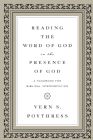 click for details | | READING THE WORD OF GOD IN THE PRESENCE OF GOD: A Handbook for Biblical Interpretation VERN S. POYTHRESS Every time we read the Bible, we’re reading in the presence of God. How should this incredible truth shape how we read? Moving quickly from principle to practice, Vern Poythress helps us rethink how we interpret the Bible by showing us the implications of entering into God’s presence as we study. This handbook outlines distinct steps for practicing faithful biblical interpretation by focusing on our fellowship with the God who speaks to us through his Word. Table of Contents Part 1: Introductory Principles for Interpretation Foundations for Interpretation Principles for Interpreting the Bible Complementary Starting Points for Interpretation Part 2: Simple Steps for Interpretation Three Simple Steps in Interpretation The Three Steps as Perspectives Correlation: Comparing Passages Part 3: Issues with Time Transmission Original Contexts Original Communication Part 4: Issues with Authorship Dual Authorship Difficulties with Authorship Part 5: Issues with Language Basic Linguistic Structures Understanding Linguistic Subsystems Units in Contrast, Variation, and Distribution Meaning Figurative Language Words and Concepts Discourse Genre Using Commentaries Part 6: Redemptive-Historical Interpretation The History of Redemption Christocentric Interpretation Typology Additional Stages Reflecting on Typology Varieties of Analogies Varieties of Types Antitypes Themes Part 7: Assessment Hermeneutics Outline in Detail Alternate Paths of Interpretation The Fulfillment Approach Boundaries for Interpretation Part 8: Examples Proverbs 10:1 Psalm 4:8 Amos 1:3 Conclusion Appendices Appendix A: Redeeming How We Interpret Appendix B: Secular Views of Meaning Appendix C: Interpreting Human Texts Appendix D: Redeemed Analogues to Critical Methods Appendix E: Philosophical Hermeneutics ENDORSEMENTS “While many sincere Christians read the Scriptures as personal communiques from God, biblical scholars often treat them as little more than human documents written for people living long ago. Vern Poythress insists neither of these paths reflects how Christ calls his followers to approach the Bible. Everyone familiar with Poythress's theological reflections knows that he is one of the brightest minds of our day. Everyone familiar with his life knows the depth of his piety. In this book, Poythress offers a glimpse into how he employs both of these gifts from the Holy Spirit as he handles the Bible. His reflections will challenge and inspire everyone who seeks to read the Scriptures in the presence of God.” -Richard L. Pratt Jr., President, Third Millennium Ministries “Vern Poythress has given the church a truly comprehensive guide to reading and appropriating Scripture. This unique resource explains both the first steps for beginners and the theological, philosophical, and linguistic foundations for sophisticated interpretation.” -Dan Doriani, Professor of Biblical and Systematic Theology, Covenant Theological Seminary “Providing both theological foundations and practical strategies for interpretation, Dr. Poythress explains the simple yet astounding truth that God is present in his Word and speaks to us as we read. With pastoral sensitivity, he combines linguistic theory, hermeneutics, systematic theology, and expert biblical knowledge into a compelling work both instructive for advanced students of the Bible and accessible for beginners. I highly commend this book and look forward to sharing it with my congregation.” -Camden Bucey, Pastor, Hope Orthodox Presbyterian Church, Grayslake, Illinois; President, Reformed Forum “Reading the Word of God in the Presence of God does two very hard things very well. First, it guides a spectrum of readers from an introductory listening to God speaking in Scripture into deeper explorations of the Word’s multifaceted witness to Christ. Second, this book exemplifies a radical, refreshing alternative to mainstream methods of biblical interpretation—an approach controlled at every point by the Bible’s claim to be the very Word of the ever-living, ever-present God.” -Dennis E. Johnson, Professor Emeritus of Practical Theology, Westminster Seminary California; author, The Message of Acts in the History of Redemption; Let’s Study Acts; and Perfect Priest for Weary Pilgrims “Vern Poythress has done readers a great service by providing an easy to understand guide to the complexities of biblical interpretation. Readers will benefit from his knowledge of the way language works, his emphasis on the divine inspiration of Scripture, and the ways in which every passage relates to God’s unfolding plan of redemption. Here is a trustworthy and practical guide for anyone interested in reading the Bible faithfully.” --Brandon D. Crowe, Professor of New Testament, Westminster Theological Seminary Vern S. Poythress (PhD, Harvard University; ThD, University of Stellenbosch) is Distinguished Professor of New Testament, Biblical Interpretation, and Systematic Theology at Westminster Theological Seminary in Philadelphia, Pennsylvania, where he has taught for four decades. In addition to earning six academic degrees, he is the author of numerous books and articles on biblical interpretation, language, and science. VSP3 EXCELLENT PRICE FOR THIS MARVELOUS VOLUME  SGCB Price: $25.75 (list price $40.00) SGCB Price: $25.75 (list price $40.00) |
| ||
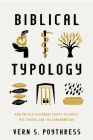 click for details | | BIBLICAL TYPOLOGY: How the Old Testament Points to Christ, His Church, and the Consummation VERN S. POYTHRESS How to Study the Old Testament for Signs of Christ Believers read Scripture to follow Christ and deepen their relationship with him. But since a majority of the Bible was written before Jesus’s life and death on the cross, many people rely on the Old Testament for historical context and moral guidance alone. However, when studied in detail, we see how even the Old Testament reveals Christ as the center of God’s plan for redemption. Biblical Typology examines how the Old Testament foreshadows Christ, the church, and the consummation through types—or symbols—pointing toward fulfillment. Well-known for his academic yet accessible writing, Vern S. Poythress not only provides examples of types and analogies found in God’s word but also teaches readers a practical framework and diagram for effectively examining them throughout Scripture. Readers will learn how to identify and interpret biblical typology for themselves as they deepen their understanding of the Bible and the wisdom of God. TABLE OF CONTENTS Tables and Illustrations Introduction: What Is Typology? Part 1: Introducing the Challenge of the Old Testament Chapter 1: Understanding the Old Testament Chapter 2: Interpreting Noah’s Flood Chapter 3: The Bronze Serpent (Num. 21:4–9) Part 2: A Framework for Typological Interpretation Chapter 4: Basic Theology for Typology Chapter 5: The Shape of Our Response to the Bible Part 3: Introducing the Practice of Typological Interpretation Chapter 6: Introducing Clowney’s Triangle Chapter 7: The Tabernacle and Its Furniture (Exodus 25) Chapter 8: Clowney’s Triangle for Episodes in Genesis Chapter 9: Underlying Principles for Clowney’s Triangle Part 4: Deepening Our Understanding of Typological Meaning Chapter 10: Symbolism and Theophany Chapter 11: The Nature of Meaning Chapter 12: Three Complementary Perspectives on Meaning Chapter 13: The Theme of Mediation Chapter 14: Comparing Types with Other Relations between Meanings Chapter 15: Analogies, Symbols, Types, and Prophecies as Perspectives Chapter 16: Allegorization Part 5: Enrichment of Clowney’s Triangle Chapter 17: Enhancements to Clowney’s Triangle Chapter 18: Multifaceted Meaning Chapter 19: Boundaries for Typological Interpretation Chapter 20: Maxims for Typological Interpretation Part 6: The Practice of Typological Interpretation Chapter 21: Types in the Mosaic Administration Chapter 22: Types in Redemptive Plots Chapter 23: Types in Creation Chapter 24: Types in the Earthly Life of Jesus Part 7: Interpretation of Analogies Chapter 25: Analogies as Similar to Types Chapter 26: Using the Triangle for Analogy Chapter 27: Analogies for the Attributes of God Chapter 28: Analogies for the Trinity Chapter 29: The Extent of Analogies Conclusion Appendices Appendix A: Patrick Fairbairn’s Principles for Typology Appendix B: The Terminology for a “Type” Appendix C: Distinctiveness in the Study of Typology Appendix D: Clowney’s Triangle of Typology Appendix E: Christocentric Preaching Bibliography General Index Scripture Index ENDORSEMENTS “I am delighted to see Vern Poythress’s book on biblical typology. His knowledge of the Scriptures and the interpretive principles necessary to handle them responsibly is unsurpassed. He presents the complex topic of biblical types clearly and simply so that laypeople and scholars alike will benefit. This is a book that you will not want to miss.” -Richard L. Pratt Jr., President, Third Millennium Ministries “As readers learn how the New Testament relates to the Old, they will encounter the subject and language of typology. I’m grateful for Vern Poythress providing this accessible resource so that interpreters can think about how the patterns and shadows of the Old Testament point to Christ, the church, and the new creation. The divine author of Holy Scripture is summing up all things in his Son. Let Poythress help you identify key symbols and types along the storyline of redemption.” -Mitchell L. Chase, Associate Professor of Biblical Studies, The Southern Baptist Theological Seminary; Preaching Pastor, Kosmosdale Baptist Church, Louisville, Kentucky HERM2 not32 1OFF24 vsp3 BRAND NEW TITLE IN MARCH OF 2024 - Nearly 40% OFF SGCB Price: $15.75 (list price $25.00) |
| ||
 | | CHANCE AND THE SOVEREIGNTY OF GOD: A God-Centered Approach to Probability and Random Events VERN S. POYTHRESS What if all events—big and small, good and bad—are governed by more than just blind chance? What if they are governed by God? In this theologically informed and philosophically nuanced introduction to the study of probability and chance, Vern Poythress argues that all events—including the seemingly random or accidental—fall under God’s watchful gaze as part of his eternal plan. Comprehensive in its scope, this book lays the theistic foundation for our scientific assumptions about the world while addressing personal questions about the meaning and significance of everyday events. Chance and the Sovereignty of God: A God-Centered Approach to Probability and Random Events By Vern S. Poythress What if all events—big and small, good and bad—are governed by more than just blind chance? What if they are governed by God? In this theologically informed and philosophically nuanced introduction to the study of probability and chance, Vern Poythress argues that all events—including the seemingly random or accidental—fall under God’s watchful gaze as part of his eternal plan. Comprehensive in its scope, this book lays the theistic foundation for our scientific assumptions about the world while addressing personal questions about the meaning and significance of everyday events. Author: Vern S. Poythress Vern S. Poythress (PhD, Harvard University; ThD, University of Stellenbosch) is Distinguished Professor of New Testament, Biblical Interpretation, and Systematic Theology at Westminster Theological Seminary in Philadelphia, Pennsylvania, where he has taught for four decades. In addition to earning six academic degrees, he is the author of numerous books and articles on biblical interpretation, language, and science. Table of Contents Introduction: Experiences with Unpredictable Events Part 1: The Sovereignty of God 1. The Bible as a Source for Knowledge 2. God’s Sovereignty 3. Unpredictable Events 4. Disasters and Suffering 5. Human Choice 6. Small Random Events 7. Reflecting on Creation and Providence 8. God’s Sovereignty and Modern Physics 9. What Is Chance? Part 2: God as the Foundation for Chance 10. Regularities and Unpredictabilities 11. Trinitarian Foundations for Chance 12. Responding to Chance 13. Chance in Evolutionary Naturalism 14. Chance and Idolatry Part 3: Probability 15. What is Probability? 16. Predictions and Outcomes 17. Theistic Foundations for Probability 18. Views of Probability 19. Subjectivity and Probability 20. Entanglement of Probabilities 21. Probabilistic Independence 22. Independence and Human Nature 23. Is God Probable? Part 4: Probability and Mathematics 24. Pictures of Probability 25. Mathematical Postulates for Probability 26. Theistic Foundations for Some Properties of Probability 27. Limitations in Human Thinking about Events and Probabilities 28. Conclusion Appendices Appendix A: Why Gambling Systems Fail Appendix B: The Real Problem with Gambling Appendix C: A Puzzle in Probability Appendix D: Interacting with Secular Philosophical Views of Probability Appendix E: Permutations and Combinations Appendix F: The Birthday Problem Appendix G: Diseases and Other Causes Appendix H: Proofs for Probability Appendix I: Statistics Appendix J: The Law of Large Numbers versus Gamblers ENDORSEMENTS “The prolific Dr. Poythress has gifted us with a unique and uniquely needed work that is both mathematically adept and theologically deep. I know of no other work that so thoroughly addresses the modern sense of chance in a deeply Reformed and philosophically oriented way.” -Douglas Groothuis, Professor of Philosophy, Denver Seminary; author, Walking Through Twilight: A Wife’s Illness—A Philosopher’s Lament “Is this the go-to book for a biblical theological perspective on chance, coincidence, randomness, risk, probability, prediction, and gambling? You bet it is! Dr. Poythress has hit another one out of the park. This book will transform the way you think about everything from quantum physics and weather forecasts to life insurance and card games.” -James N. Anderson, Carl W. McMurray Professor of Theology and Philosophy, Reformed Theological Seminary, Charlotte “Back when I was a researcher in Systems Engineering and Operations Research, probability was my daily breath, so I was delighted to see this work. Not only was this a fun read for me, but I find in Vern Poythress a firm grasp of the mathematical, philosophical, theological, and apologetic issues necessary to guide those who want to think clearly on this topic—a topic which, because of its technicality, many will be daunted by. And Poythress always has an eye for the helpful illustration!” -C. John Collins, Professor of Old Testament, Covenant Theological Seminary “Many think Calvinists simply reject the idea of chance, random events, and probability. But that is not entirely true. My friend Vern Poythress shows in this book that the God of the Bible—and of Calvin—is in fact the foundation, both of causation and of randomness in the world. Poythress is well-suited to develop this argument, with doctorates in both New Testament and mathematics, and as the author of important recent books on logic and science. I do not fully understand the mathematics of this book, but the theology is entirely biblical, and I can’t imagine a better place to start for readers interested in this subject matter.” -John M. Frame, Professor of Systematic Theology and Philosophy Emeritus, Reformed Theological Seminary VSP3 SGCB Price: $19.50 (list price $30.00) |
| ||
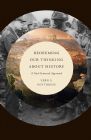 click for details | | REDEEMING OUR THINKING ABOUT HISTORY: A God-Centered Approach VERN S. POYTHRESS Why Is It Critical for Christians to Study the Past? How does knowledge of the past shape Christians’ views of God, Christ’s redemption, and humanity as a whole? In his new book, Vern S. Poythress teaches Christians how to study and write about the past by emphasizing God’s own command to remember his works and share them with the next generation. Readers will explore concepts such as providentialism, Christian historiography, divine purpose, and the 4 basic phases of biblical history: creation, fall, redemption, and consummation. By learning how to appropriately study history, believers will begin to recognize God’s lordship over all events and how even minor incidents fit into his overarching plan. TABLE OF CONTENTS Chapter 1: The Importance of History Part 1: What We Need in Order to Analyze History: Essential Resources That God Supplies Chapter 2: Experiencing History Chapter 3: Foundations for Historical Analysis Chapter 4: Spiritual Antithesis: Darkness and Light Chapter 5: Reductionistic Historical Analysis Chapter 6: Understanding People Chapter 7: Understanding Historical Causes Chapter 8: Miracles Part 2: History in the Bible: How the Bible Goes about Writing History Chapter 9: Unity in Biblical History Chapter 10: Diversity in Biblical History Chapter 11: The Uniqueness of the Bible Part 3: Understanding God's Purposes in History: Divine Purposes—and Our Limitations—in the Study of History Chapter 12: God in Biblical History Chapter 13: Cautions in Understanding Divine Purposes Chapter 14: The Value of Recognizing Divine Purposes Chapter 15: Biblical Principles Guiding Historical Understanding Chapter 16: Academic Historical Analysis Chapter 17: Pressure toward Religious “Neutrality” Chapter 18: Applying Principles from Revelation Part 4: What Does History Writing Look Like? Examples of Challenges in Writing about Particular Periods Chapter 19: Christianity in the Roman Empire Chapter 20: Interpreting the Reformation and Beyond Chapter 21: Histories of Other Civilizations Part 5: Alternative Versions of How to Think about History: Competing Ways of Doing History among Christians Chapter 22: Five Versions of Historiography Chapter 23: Evaluating Providentialism Chapter 24: Other Versions of Christian Historiography Chapter 25: Perspectives on Historiography Chapter 26: Further Reflection on Providentialism Appendix: Providence according to Mark Noll Bibliography General Index Scripture Index ENDORSEMENTS “Vern Poythress has written carefully about how a proper Christian doctrine of providence should (and should not) shape a believer’s understanding of human history. His book is particularly welcome in showing that ‘history’ includes a wide range of possibilities and that most of them can contribute (though in different ways) to Christian study of the past.” -Mark A. Noll, author, Jesus Christ and the Life of the Mind “Can we think Christianly about history in its two senses of the events of the past and the written account of those events? Vern Poythress affirms that we can. He seeks guidance from the Bible about how the past should be understood by believers and about how Christian historians should undertake their vocation. He places God at the center of both.” -David Bebbington, Emeritus Professor of History, University of Stirling “Redeeming Our Thinking about History continues Vern Poythress’s penetrating analysis of various fields of human intellectual endeavor. In continuity with his previous volumes, Poythress writes on why history is important and how best to read history—whether biblical or secular—in a God-honoring fashion. While capable of stratospheric thinking and communication, the author in this delightful volume simply takes the reader by the hand and leads him or her to the innumerable problems and issues of historical analysis, then resolves those vast and complicated topics. This approach taps into Poythress’s decades of examining and interpreting the Bible and presents very clear paths for readers to follow. Those insights are combined with practical principles to help us understand events in our own lives. Highly recommended.” -Richard C. Gamble, Professor of Systematic Theology, Reformed Presbyterian Theological Seminary “With a lucid brevity that Calvin might envy, Poythress covers a broad array of relevant topics in his treatment of redeeming our thinking about history. He strikes just the right balance between common grace and the antithesis as it applies to meanings, events, and people, arguing against all reductionistic approaches (such as Marxism or logical positivism) and covering matters as widespread as the unity, diversity, and uniqueness of the Bible; providence; and the limits of our understanding. He demonstrates the inescapability of a religious stance in writing history and urges that it be done from a truly biblical perspective, arguing for a multi-perspectival approach that will yield the richest and most textured historical account—one that acknowledges God’s providence while remembering our creaturely limits in discerning the meaning of his superintendence of history.” -Alan D. Strange, Professor of Church History, Mid-America Reformed Seminary; author, The Doctrine of the Spirituality of the Church in the Ecclesiology of Charles Hodge Vern S. Poythress (PhD, Harvard University; ThD, University of Stellenbosch) is Distinguished Professor of New Testament, Biblical Interpretation, and Systematic Theology at Westminster Theological Seminary in Philadelphia, Pennsylvania, where he has taught for four decades. In addition to earning six academic degrees, he is the author of numerous books and articles on biblical interpretation, language, and science. G-CH CWN// VSP3 1OFF24 BRAND NEW TITLE AT 50% OFF SGCB Price: $12.50 (list price $25.00) |